
Embark on a journey through the realm of Real-Time Data Analytics, where businesses harness the power of immediate data insights to drive strategic decisions and gain a competitive edge. From industries revolutionizing their operations to the technologies propelling this evolution, explore the dynamic landscape of real-time data analytics in the modern business world.
Discover the key components that make real-time data analytics indispensable in today’s fast-paced environment, and how organizations can leverage this cutting-edge approach to stay ahead of the curve.
Introduction to Real-Time Data Analytics
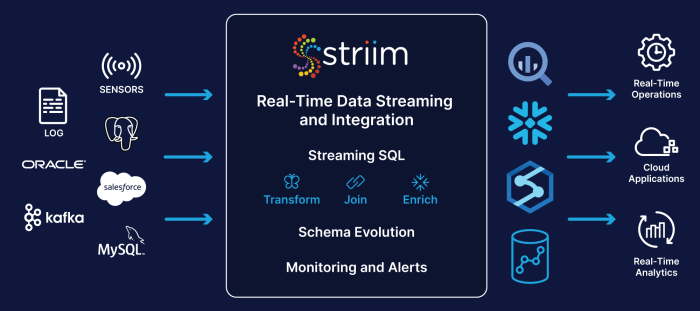
Real-time data analytics refers to the process of analyzing data and generating insights instantly as the data is created or received. This technology has become increasingly important in modern business operations due to the need for quick decision-making and response to changing market conditions.Unlike traditional data analytics, which often involves processing historical data to identify trends and patterns, real-time data analytics allows businesses to gain insights from data in the moment it is generated.
This enables companies to make faster and more informed decisions, leading to improved operational efficiency and competitive advantage.
Examples of Industries Benefiting from Real-Time Data Analytics
- Finance: Banks and financial institutions use real-time data analytics to detect fraudulent activities, monitor market fluctuations, and personalize customer experiences.
- Retail: Retailers use real-time data analytics to optimize inventory management, track customer behavior, and adjust pricing strategies in response to demand.
- Healthcare: Hospitals and healthcare providers utilize real-time data analytics to improve patient care, optimize resource allocation, and identify trends in public health emergencies.
- Telecommunications: Telecom companies leverage real-time data analytics to monitor network performance, predict equipment failures, and enhance customer service.
Technologies for Real-Time Data Analytics
Real-time data analytics require robust technologies to process and analyze data rapidly. Some commonly used technologies in this field include Apache Kafka, Apache Storm, and more. These technologies play a crucial role in enabling organizations to harness the power of real-time data for decision-making and insights.
Role of Machine Learning and AI
Machine learning and artificial intelligence (AI) are essential components in enhancing real-time data analytics. These technologies enable algorithms to learn from data, identify patterns, make predictions, and optimize processes in real-time. By incorporating machine learning and AI into real-time data analytics, organizations can gain deeper insights and achieve more accurate results.
Comparison of Tools and Platforms
Various tools and platforms are available for real-time data analytics, each offering unique features and capabilities. Some popular options include Apache Flink, Spark Streaming, and Google Cloud Dataflow. These tools differ in terms of scalability, processing speed, ease of use, and integration capabilities. Organizations must carefully evaluate their requirements and choose the tool or platform that best suits their needs for real-time data analytics.
Implementing Real-Time Data Analytics
Implementing a real-time data analytics system involves several key steps to ensure successful deployment and utilization of the technology. Let’s explore the process, challenges faced, and best practices for effective implementation.
Steps Involved in Implementing a Real-Time Data Analytics System
- Set clear objectives and goals for the real-time data analytics system to align with business needs.
- Assess and select the appropriate real-time data analytics technology that meets the requirements of the organization.
- Identify and integrate the necessary data sources for real-time data collection and analysis.
- Design and implement the data processing and analytics workflows to enable real-time insights generation.
- Test and validate the system to ensure accuracy, reliability, and scalability.
- Deploy the real-time data analytics system across the organization and provide necessary training to users.
- Monitor and optimize the system continuously to improve performance and address any issues that may arise.
Challenges Faced During Implementation and How to Overcome Them
- Integration complexity: Overcoming data silos and integrating diverse data sources can be challenging. Engage with experts in data integration and utilize tools that facilitate seamless data connectivity.
- Data quality issues: Ensuring data accuracy and consistency is crucial for real-time analytics. Implement data quality checks and cleansing processes to maintain high-quality data inputs.
- Scalability concerns: As data volume grows, scalability becomes a concern. Design the system with scalability in mind and leverage cloud-based solutions for flexible resource allocation.
- Security and compliance: Protecting sensitive data and complying with regulations are paramount. Implement robust security measures, encryption, and access controls to safeguard data integrity.
Best Practices for Successful Deployment of Real-Time Data Analytics Solutions
- Establish a dedicated team with expertise in data analytics, IT infrastructure, and business domain knowledge to oversee the implementation.
- Collaborate closely with stakeholders to define requirements, expectations, and success metrics for the real-time analytics system.
- Adopt an agile approach to development and deployment to iterate quickly, gather feedback, and make necessary adjustments in real-time.
- Monitor system performance and user feedback continuously to identify areas for improvement and optimization.
- Document processes, data flows, and system configurations to ensure transparency, knowledge sharing, and future scalability.
Real-Time Data Analytics in Cybersecurity Solutions
Real-time data analytics play a crucial role in enhancing cybersecurity solutions by enabling organizations to detect and respond to cyber threats promptly.
Importance of Real-Time Data Analytics in Cybersecurity
Real-time data analytics is essential in cybersecurity as it allows for immediate monitoring of network activities, identification of abnormal behavior, and swift response to potential threats. By analyzing data in real-time, organizations can proactively protect their systems and data from cyber attacks.
How Real-Time Data Analytics Helps in Detecting and Responding to Cyber Threats
- Real-time monitoring: Tools such as SIEM (Security Information and Event Management) systems continuously analyze network traffic, logs, and events to detect any suspicious activities.
- Behavioral analytics: By utilizing machine learning algorithms, real-time data analytics can identify patterns of behavior that deviate from normal activities, helping in the early detection of threats.
- Threat intelligence integration: Real-time data analytics tools can integrate threat intelligence feeds to stay updated on the latest cybersecurity threats and take proactive measures to prevent attacks.
Examples of Real-Time Data Analytics Tools in Cybersecurity
- Splunk: A popular SIEM tool that enables real-time monitoring and analysis of security events.
- Elasticsearch: Known for its scalability and speed, it is used for real-time log analysis and threat detection.
- Darktrace: Utilizes AI algorithms to detect anomalies in network behavior in real-time and respond to threats automatically.
As we conclude our exploration of Real-Time Data Analytics, it becomes evident that the ability to process and act on data in real time is a game-changer for businesses across various sectors. By embracing this transformative technology, organizations can adapt to market dynamics swiftly and make data-driven decisions that propel growth and innovation.
Commonly Asked Questions
How does real-time data analytics benefit businesses?
Real-time data analytics enables businesses to make informed decisions quickly based on up-to-the-minute insights, leading to improved efficiency and competitiveness.
What are some common challenges in implementing real-time data analytics systems?
Challenges may include data integration issues, ensuring data accuracy in real time, and the need for robust infrastructure to handle large volumes of data.
Can real-time data analytics help in cybersecurity?
Absolutely, real-time data analytics plays a crucial role in cybersecurity by detecting anomalies, identifying threats promptly, and enabling rapid responses to cyber attacks.


